
On August 19, in the Gobi desert near Minqin, Gansu, a 66-meter rocket dropped out of the sky. Four landing legs braced perfectly as it touched down upright in the sand. It was the first orbital-class rocket in China recovered with landing legs - and the first Chinese stainless-steel rocket ever brought home intact.
The rocket is the Zhuque-3, built by LandSpace. But behind the headlines, one detail was quietly more significant than the landing itself: its primary structure is not the “aerospace-grade” carbon fiber composite people expect, but stainless steel.
It is the first time a Chinese rocket has been built with a stainless-steel body. And that seemingly “low-tech” choice hides a material-accounting shift worth every material supplier's attention.

Why Recovery Matters: Every Launch Used to Throw Away 70% of the Hardware
Start with the arithmetic. In a rocket, the first stage accounts for roughly 70% of the total cost; fuel is just 1-3%. In the throwaway era, every launch wrote off 70% of the hardware. Recovery spreads that cost across many flights.
The Zhuque-3 is designed for about 20 reuses. That is projected to cut launch cost per kilogram from the 100,000+ CNY of a disposable rocket toward a target below 20,000 CNY - a 70-85% reduction. Whether a rocket can come back is what decides whether commercial spaceflight can make money at all.
Musk's Verdict: “Could Beat Falcon 9”
This rocket earned attention before it even landed. Last September, Elon Musk commented directly on the Zhuque-3: it combines the Falcon 9 architecture with Starship characteristics - stainless steel and liquid-oxygen / methane - and could one day beat the Falcon 9.
It is a pointed remark, because the Zhuque-3 sits exactly in the gap of SpaceX's own lineup. The Falcon 9 runs on RP-1 kerosene, which needs heavy maintenance after reuse; the Starship is advanced but oversized for economics. The Zhuque-3 pairs Falcon-9-class practical payload with Starship's easy-to-maintain liquid-methane-plus-stainless route.
One harder fact: the first company in the world to reach orbit with a liquid-oxygen/methane engine was not SpaceX - it was LandSpace, whose Zhuque-2 reached orbit on methane in July 2023. The Zhuque-3's methane route is not copying Starship; it was walked on its own.
“Steel Instead of Carbon”: A Chinese First

Back to the material. For a long time, the popular image of “aerospace-grade” material is light, strong, expensive carbon fiber composite. The Zhuque-3 made a precedent-breaking choice: a stainless-steel primary structure.
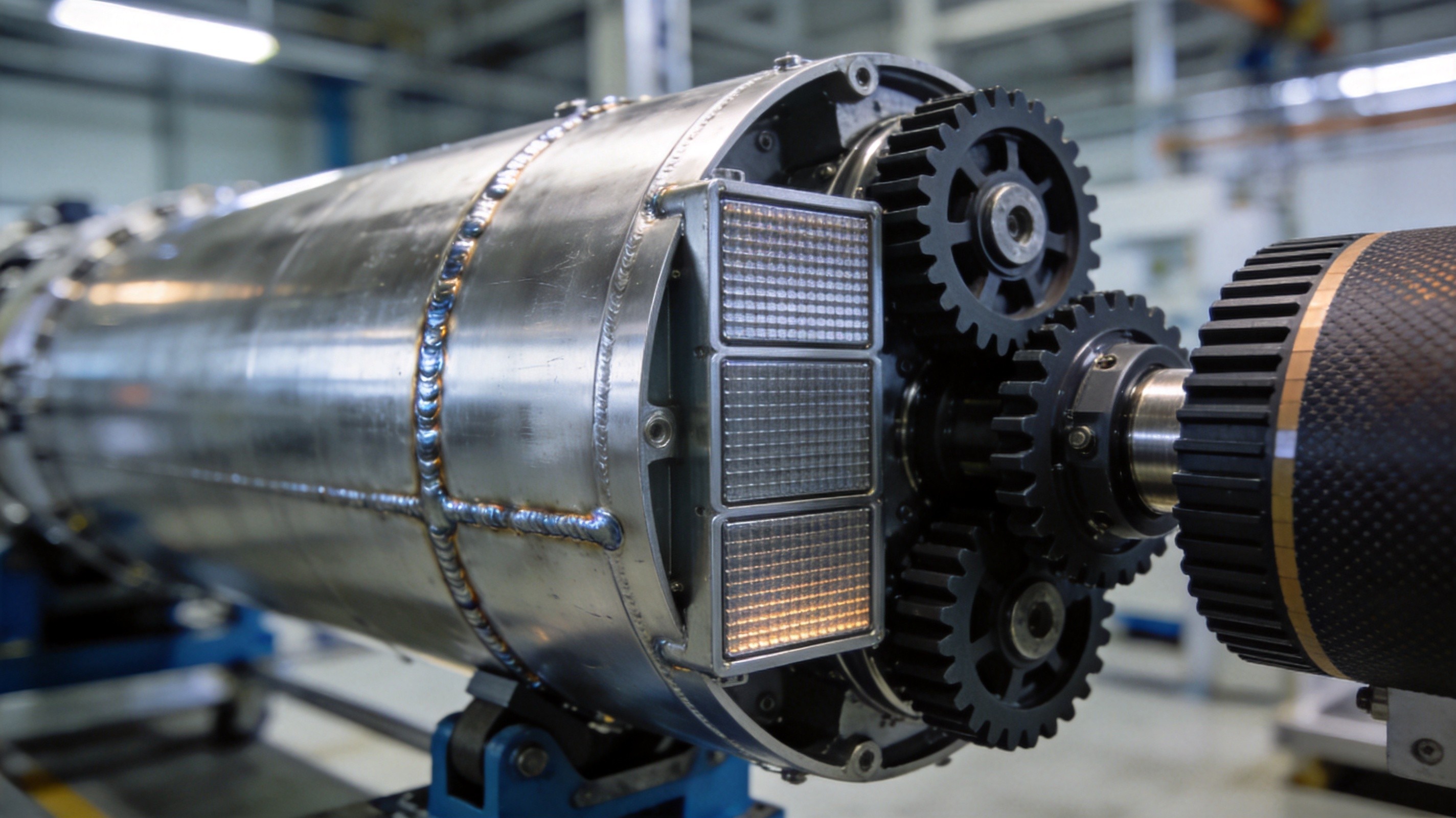
Why? A reusable rocket re-enters the atmosphere many times, and local surfaces take repeated thousand-degree thermal shocks. Stainless steel has two natural advantages: a high melting point and slow strength degradation at temperature - it carries its own thermal protection, slashing the need for extra insulation coatings and simplifying the whole thermal-protection system.
Then the cost ledger: raw stainless steel runs about one-fifth the cost of a carbon-fiber body. Cheap, tough, easy to repair - when a rocket turns from a disposable consumable into a repeatedly flown vehicle, indicators that used to be ignored suddenly become load-bearing.
Why “Doesn't Coke” Matters More Than “Is Powerful”
Stainless steel is only half the story. The fuel is the other half, and behind it sits a material question too.
The Falcon 9 burns RP-1 kerosene, which leaves coke deposits on turbine and nozzle walls - like the black crust in a cooking pot. Every return means the engine must be torn down, cleaned, inspected and often rebuilt, sometimes with a new turbopump. The Falcon 9 is recoverable, but after every “shift” it still needs a full overhaul; it cannot simply be “refueled and flown again.”
Methane burns to water and CO2, producing essentially no coke. After recovery, a methane engine needs only simple inspection before reuse, drastically simplifying maintenance and shortening turnaround. The Zhuque-3's real strength is not any single material but a combination: stainless steel withstands heat, methane does not coke, and the landing legs come down reliably. Get the materials right and the rocket can fly fast, stable and cheap - over and over.
From “Chasing Performance” to “Full-Lifecycle Cost”
The most valuable signal of this stainless rocket is not “who replaced whom.” It is that the logic of material selection has changed.
Aerospace materials used to be performance-first: lighter, stronger, more extreme-tolerant, with cost secondary. But in the reusable era, the ledger becomes a full-lifecycle equation - procurement cost, processing, repairability, reuse count, maintenance cycles - every field now counts.
Stainless steel is not “better” than carbon fiber; it is “more suitable” for the new scenario of repeated recovery and low-cost, high-frequency launch. Carbon-fiber composites remain irreplaceable in lightweight, high-strength applications. The real change: scenario now decides material. And that lesson reaches far beyond rockets.
Material Is the Ticket In; Standards Are the Moat
Recovering successfully does not equal reusability. Recovery means landing the rocket back intact; reuse means, after minor refurbishment, flying it again. Between them lie real obstacles: micro-cracks after re-entry, internal engine wear, part fatigue and replacement - each needing a complete system of inspection, maintenance and life assessment.
China's launch industry does not yet have mature reuse standards, inspection procedures or component replacement rules; it can only accumulate them flight by flight. LandSpace targets a first re-flight of the recovered body within six months. Compare: SpaceX's Falcon 9 has flown more than 500 reuse missions, with turnaround counted in days. The Zhuque-3 has just secured its first landing. Materials decide whether you get through the door; the reuse-standards system decides who survives to the end.
The Rocket's Material Ledger Is Replaying Across Every “Mass Production” Industry
The most important lesson of the Zhuque-3 is not the news hook “China used stainless steel,” but the engineering logic behind it: material formulation, forming process and precision parts must be one integrated problem.
Stainless steel is useless if welding passes fail or sealing structures are not precise enough to survive repeated reuse; methane is clean, but without precise engine parts the flight cannot stay stable. Material, process and parts have always been one question.
That logic is now extending from aerospace into robotics, low-altitude economy and new-energy vehicles - every industry chasing “mass production.” Whoever owns the full chain - formulation to process to precision parts - gets written into procurement lists.
Just as the Zhuque-3 redefined the rocket's material ledger with stainless steel, in robotics and high-end manufacturing the suppliers that understand materials - and, more, understand the integrated material-process-part chain - are becoming the winners of the next generation of mass-production competition. Dalian Luyang Technology develops modified specialty functional plastics and precision molding, offering modified PEEK and PPS formulations with material-process-part integration; Beijing Yuchuan New Materials focuses on specialty engineering plastics, designing materials backward from end-market needs for robot structural parts and lightweight components.
In the reuse era, the material ledger is being recalculated. Those who can make the numbers work are the ones who capture the mass-production dividend.