
On August 26, the second World Humanoid Robot Games concluded at the National Speed Skating Oval in Beijing. Tiangong sprinted 400 meters in 38.15 seconds, Zhiyuan swept 13 gold medals, and for the first time, humanoid robots were watched by the world the way athletes are.
But two days before the Games, something more consequential than "who runs fastest" happened: the Ministry of Industry and Information Technology (MIIT) released the National Humanoid Robot Industry Standard System Construction Guideline (2026 Draft) for public consultation, running from August 25 to September 23. The document sets a hard target: complete at least 100 key humanoid robot standards by 2028 and roll them out across more than 200 enterprises.
In plain language: the humanoid robot "industry" is about to become officially official. From now on, whose robots can enter factories and take on jobs will first have to pass the standards gate.
Yet when you scan the standards list from top to bottom, one striking gap stands out — the materials that determine whether a robot can even move are barely mentioned.

100 National Standards to Cure the "Everyone Does Their Own Thing" Problem
First, why this guideline matters. China now has more than 400 humanoid robot models — over half of the world's total. That sounds impressive, but the reality is fragmentation: joint module interface specifications alone come in more than 20 variants, and compatibility between different brands' reducers and servo motors is under 40%.
One robot needs a bespoke tendon cable; another needs a brand-new mold just to change a joint. When parts are not interchangeable, scale production is impossible and costs cannot come down.
The guideline takes aim at exactly this: six major domains — common fundamentals, brain-like intelligence and computing, limbs and components, complete machines and systems, applications, and safety and ethics — will all be standardized. Dexterous hands, servo motors, sensors and joint modules will all have unified technical indicators. The industry's long-called-for shift "from show robots to work robots" is finally being enforced.
Flip Through the 100 Standards — and Materials Are Nowhere
Here is the strange part. The guideline covers dexterous hands, servo motors, sensors and joint modules — but the word "materials" barely appears.
Yet how does a humanoid robot move? Through PEEK gears and bushings inside its joints, through the UHMWPE tendon cables in its dexterous hands (barely thicker than a hair), through the carbon fiber composite layers of its shell. These materials are the robot's muscles, bones and flesh. However detailed the complete-machine standards are, without defined, unified material grades with hard performance and service-life indicators, the whole system rests on air.
This is not a small matter. Without material standards, every robot company is "blind-picking" materials — and the lifespan and performance of every tendon and every joint are whatever each company claims they are.
The Robot's "Tendons, Bones and Flesh" Are All Blocked on Materials
Tendons — UHMWPE fiber. The mainstream route today is ultra-high molecular weight polyethylene (UHMWPE) fiber. Its specific strength is 15 times that of steel, and its density of 0.97 g/cm³ is lighter than water — the key to lightweight dexterous hands.
But its weakness is equally critical: poor creep resistance and wear resistance. Under repeated tension it slowly "stretches," causing joint precision drift; friction makes it fuzz and break. In the industry, tendon cables are typically replaced every 1 to 1.5 years, and no material yet offers 5–10 years of maintenance-free service.
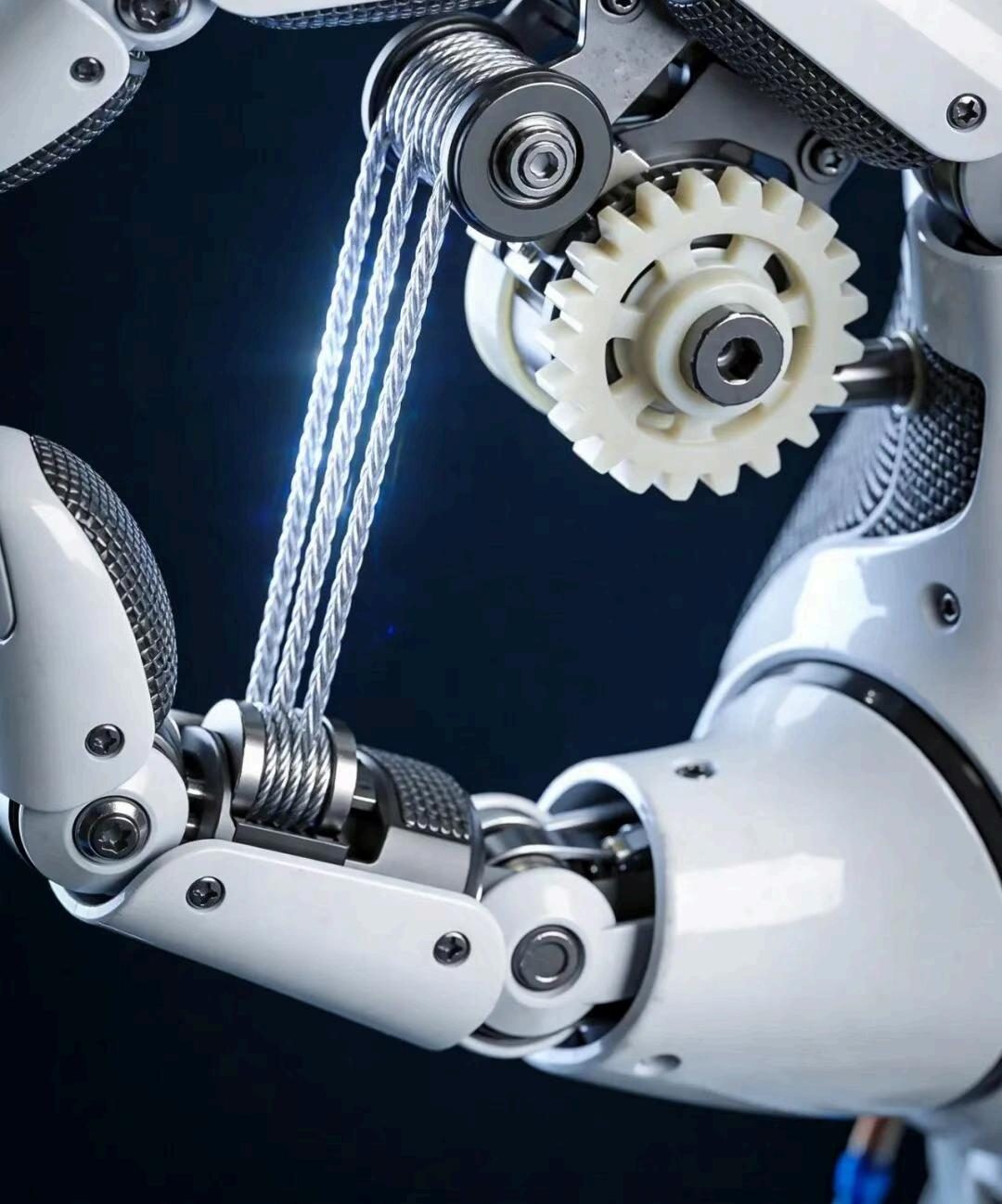
Bones — joint materials. PEEK has become the first choice for robot joint gears and bushings because it is 42% lighter than aluminum, withstands 260°C, and is wear-resistant and self-lubricating. But domestic high-end PEEK still lags overseas: more than 70% of harmonic reducers still come from Japan, and the localization rate of high-torque-density servo motors is under 18%.
Put these numbers together and the picture is stark: the robot's "intelligence" has raced ahead, while its "body" — the materials that decide lifespan, precision and cost — is still exposed.
Without Material Standards, Robots Cannot Be Mass-Produced
Some might say material standards can wait. They cannot.
A single humanoid robot currently costs around 400,000 CNY in materials; the industry consensus is that profitability only becomes real below 50,000 CNY. The only path is scale procurement and general interchangeability. But without unified material standards, every company uses its own grades, procurement stays small-batch and custom, and costs never fall. However beautiful the complete-machine standards look, if the material link is stuck, mass production is paper talk.
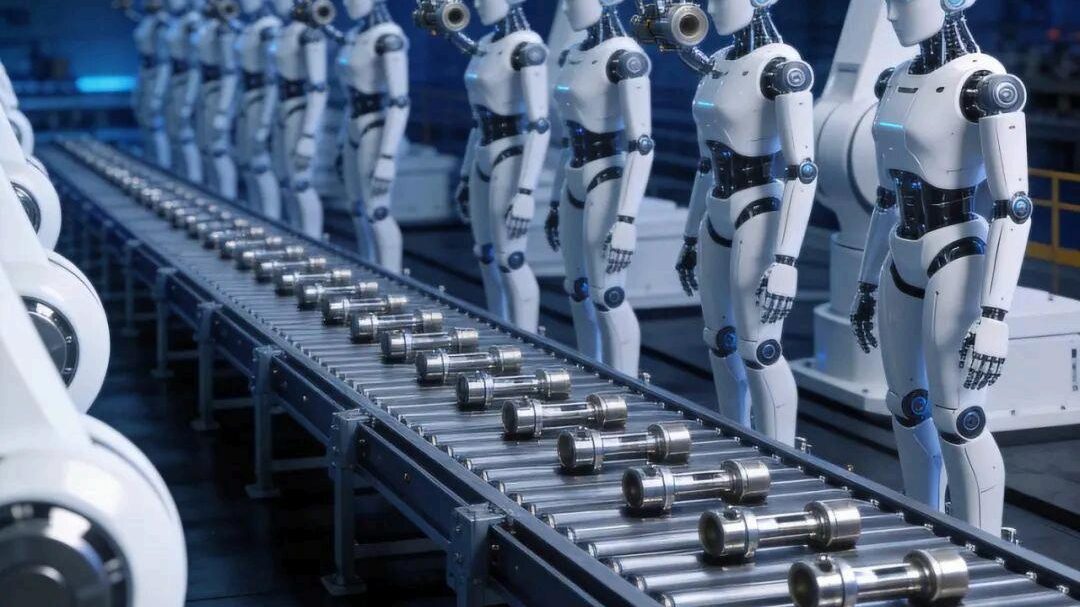
The good news is that material standards are not "impossible to set" — they are just getting started. In 2025, China led the proposal of the "General Technical Specification for Humanoid Robot Tendon Materials", defining five original indicators including the tendon fatigue attenuation coefficient, which has already been referenced by international standards organizations.
This means the very absence of material standards is the biggest opportunity window for domestic material companies.
When Standards Land, That Is the Entry Ticket for Material Companies
Once this national standards list takes effect, whoever aligns fastest, whose materials pass inspection and get written into robot BOMs (bills of materials), holds the entry ticket to the humanoid robot mass-production era.
The logic is exactly the same as the new-energy vehicle wave: the first material companies to earn automotive-grade certification became the leading suppliers later.
For companies focused on specialty engineering plastics, high-performance fiber composites and robot components, this is the moment to take position — not to wait for standards to arrive and then follow, but to help define the rules alongside them. Over the past two years, Dalian Luyang Technology has been working deep inside the "robot body": from specialty engineering plastics to high-performance fiber composites and robot components, every material is being prepared for the standards era. For robots to be mass-produced, materials must first "officially register".
The Material Ceiling Decides the Robot Ceiling
Many assume humanoid robots are bottlenecked by chips, algorithms or AI. That is only half the story.
Chips decide whether a robot is smart. Materials decide whether it can walk into factories and homes. The life of one tendon cable, the precision of one joint, the strength of one shell — these are the most practical thresholds before mass production.
The 100 national standards are the starting gun. When it fires, the race is about whose materials pass the standards first, whose materials enter the BOM first, and who stands on the production line first.
The standards battle is, in essence, a battle for voice — and the last mile of that voice is in materials. How much a robot can carry, how long it can last, whether it can be mass-produced — the answers all live in that invisible tendon cable and in the materials inside every joint.