
China’s first embodied-intelligent digital metro, VELLINK, has just been unveiled: its control hosts are 50% leaner, its wiring is optimized by 30%, and it saves over 10% energy. The smarter the train, the denser its sensing network and the higher its electrical density - and the less the PEEK insulation and sealing parts hidden in its electrical system can afford to be sloppy.
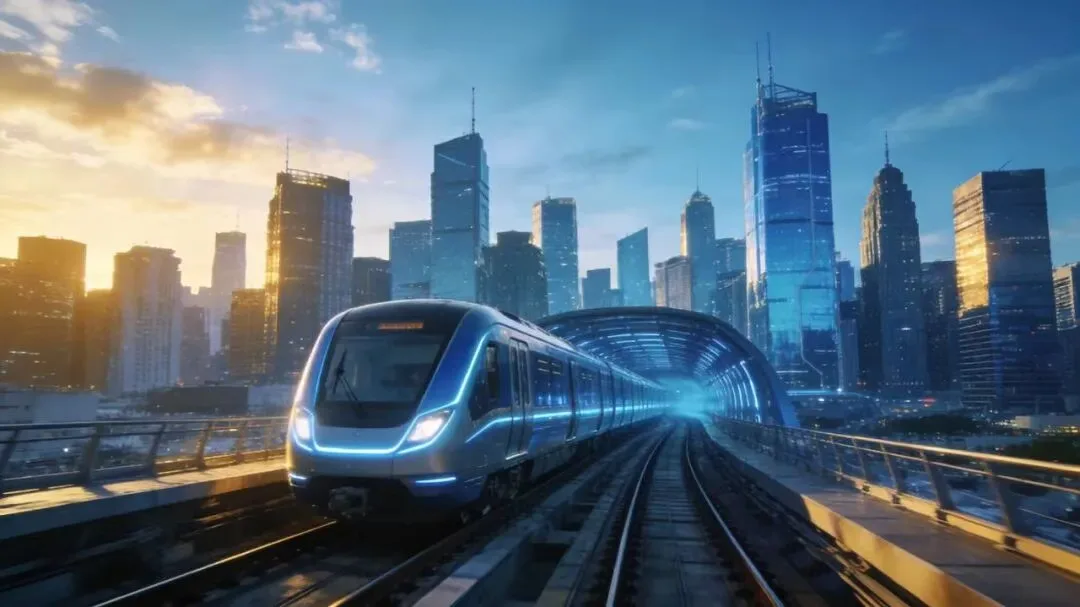
A Train That “Thinks” Has Just Made Its Debut
On 9 October 2026, the green-intelligent digital metro VELLINK, developed by CRRC Changchun Railway Vehicles leading and jointly with Chengdu Rail Transit Group, made its official debut - China’s first embodied-intelligent digital metro and the world’s first to carry embodied-intelligence technology on a metro train.
It rests on a cloud-edge-device coordinated architecture, AI-powered driving, digital twin and full-lifecycle carbon management. Through its full-domain sensing network it carries out real-time “perception - decision - interaction,” turning the train from a passive executor of commands into a smart agent that proactively optimizes operations. The unveiling came just as the 26th China International Industry Fair opened - the freshest hot topic in rail transit.
Control Hosts 50% Leaner, Wiring Optimized 30%
VELLINK is not a rebadged shell with an added screen - it acts on the architecture itself. It is the first to apply a functional-domain concept, fusing three systems - intelligent operation, passenger service and real-time monitoring - to cut control hosts by 50% and optimize whole-train wiring by 30%.
The power-supply side is overhauled too: re-engineering the voltage-conversion links of the air-conditioning and auxiliary power systems lifts power efficiency by about 9%; permanent-magnet traction and an efficient silicon-carbide converter raise comprehensive energy savings to over 10% and cut full-lifecycle carbon emissions by about 15%. Scaled use of lightweight carbon fiber, magnesium-aluminum alloy and polycarbonate trims vehicle weight by about 18%.
The Smarter It Gets, the Denser Its Electrical System - and the More It Fears a “Leak”
But the smarter it gets, the more specific the cost. After loading radar, HD cameras and hundreds of sensors, the whole train’s sensing network, power-supply loops and communication harnesses are packed ever tighter; control hosts, converters and motor drives climb in power and voltage; and signals must transmit stably amid vibration and interference.
This forces three classes of material problems. First, insulation - between high voltage and dense harnesses, once insulation decays, leakage and short circuits follow. Second, sealing - sensors and connectors must stay dry and tight through rain, fog and temperature swings. Third, wear and creep resistance - under long-term maintenance-free vibration, parts must not deform, crack or fail.
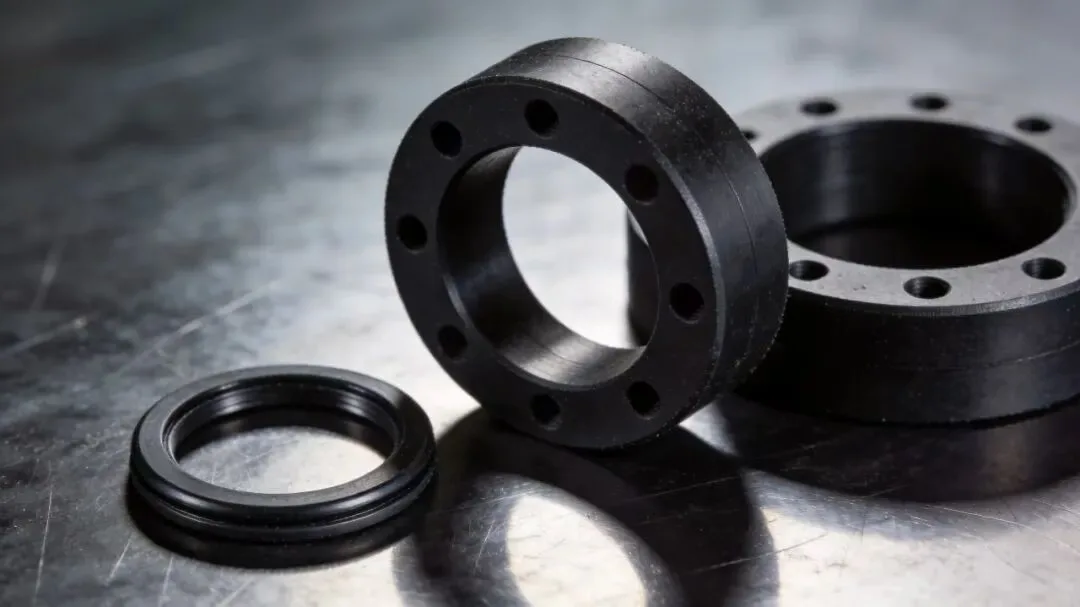
Rail Transit’s “Material Hell”
Rail transit’s harshness is that it is never a “single test”: high vibration, a wide temperature window (about -40°C to +125°C), strong electromagnetic interference and long-term maintenance-free operation - all at once.
Under sustained thermal cycling and mechanical stress, ordinary engineering plastics tend to develop micro-crack growth, surface carbonization or dielectric-strength decay - and in a high-voltage, high-frequency environment, both “signal integrity” and “system redundancy safety” can be broken. For insulating materials, the industry demands dimensional stability, consistent dielectric behavior, resistance to creep, reliable flame retardance, and structure and function that do not degrade across a 10-year service life.
Why the Industry Turns to PEEK
The industry is turning to PEEK (polyetheretherketone): its long-term continuous service temperature reaches 260°C, with short spikes above 300°C; its high volume resistivity and stable dielectric constant suit high-voltage electrical insulation; and it is wear-resistant, creep-resistant and dimensionally stable, holding constraint and sealing precision even under long-term vibration.
Just as decisive, PEEK passes rail transit’s special “fire gate”: it meets the EN45545-2 standard (R22/R23/R26, UL94 V-0, low smoke, low toxicity, halogen-free) - simultaneously heat-resistant insulating and flame-retardant safe, a reliable choice for high-voltage connection and electrical-cabinet interiors on high-speed railways, metros and light rail.
How PEEK Works Inside a “Smart Metro”
It appears in those positions that are “out of sight but holding tension”: making high-voltage connector insulation parts, terminal blocks and electrical-cabinet internal insulation parts that build reliable electrical isolation between high voltage and dense harnesses; sensor housings and connector insulation seats that keep signals transmitting stably under vibration and electromagnetic interference; sealing parts for motor drives, braking and hydraulic systems that resist aging without leaking through temperature swings and muddy water; and wear-resistant bushings that take the high-frequency friction off moving parts.
Above all, for a next-generation train like VELLINK - one that is simultaneously “intelligent, lightweight and high-density” - the denser the sensing network and the finer the power-delivery links, the higher the reliability bar on insulation and sealing parts. The smarter the train, the less that load-bearing layer of PEEK can afford to be unclear.
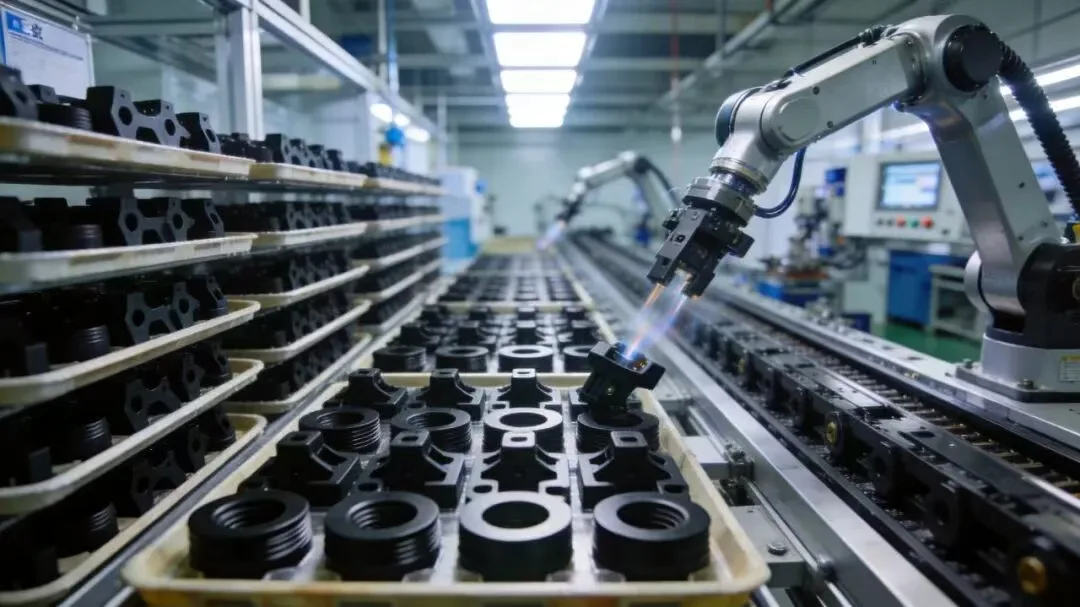
Dalian Luyang, Holding Up a “Train That Thinks”
These requirements land exactly on the capabilities of Dalian Luyang Technology. Dalian Luyang works deep in the modification, injection molding and precision machining of PEEK specialty engineering plastics, mass-producing high-voltage connector insulation parts, sensor-housing insulation seats, connector insulation structures, sealing parts and wear-resistant bushings - squarely matching the insulation, heat resistance, wear resistance and flame retardance demanded by intelligent rail-transit components.
Behind a metro that “thinks” lie countless rings of unremarkable insulation and sealing that hold the signals and the current steady. When a PEEK insulation part holds for ten years on a high-vibration, high-voltage rail line without failing, domestic specialty engineering plastics are, with the word “reliability,” carrying China’s metros on to the next stop on the road to full intelligence.