
In early October, a single number made the rounds of the energy industry: China's first deepwater oilfield - the Liuhua (Flowing Flower) oilfield phase-two development - has now produced more than 2 million tonnes of crude oil cumulatively.
The 42,000-tonne tanker Haili-1, loaded with deep-sea crude, cast off from the Haiji-2 jacket - Asia's deepest-water fixed jacket platform - and headed for shore. Behind it stands a bigger milestone: China's deepwater oil and gas output has now passed 12 million tonnes of oil equivalent, a historic step from 300-meter offshore fields to more than 1,500-meter ultra-deep water.
The deeper the flame burns, the hotter the industry's anxiety. Because deep water does not fear “can’t produce” first - it fears “it leaks.”
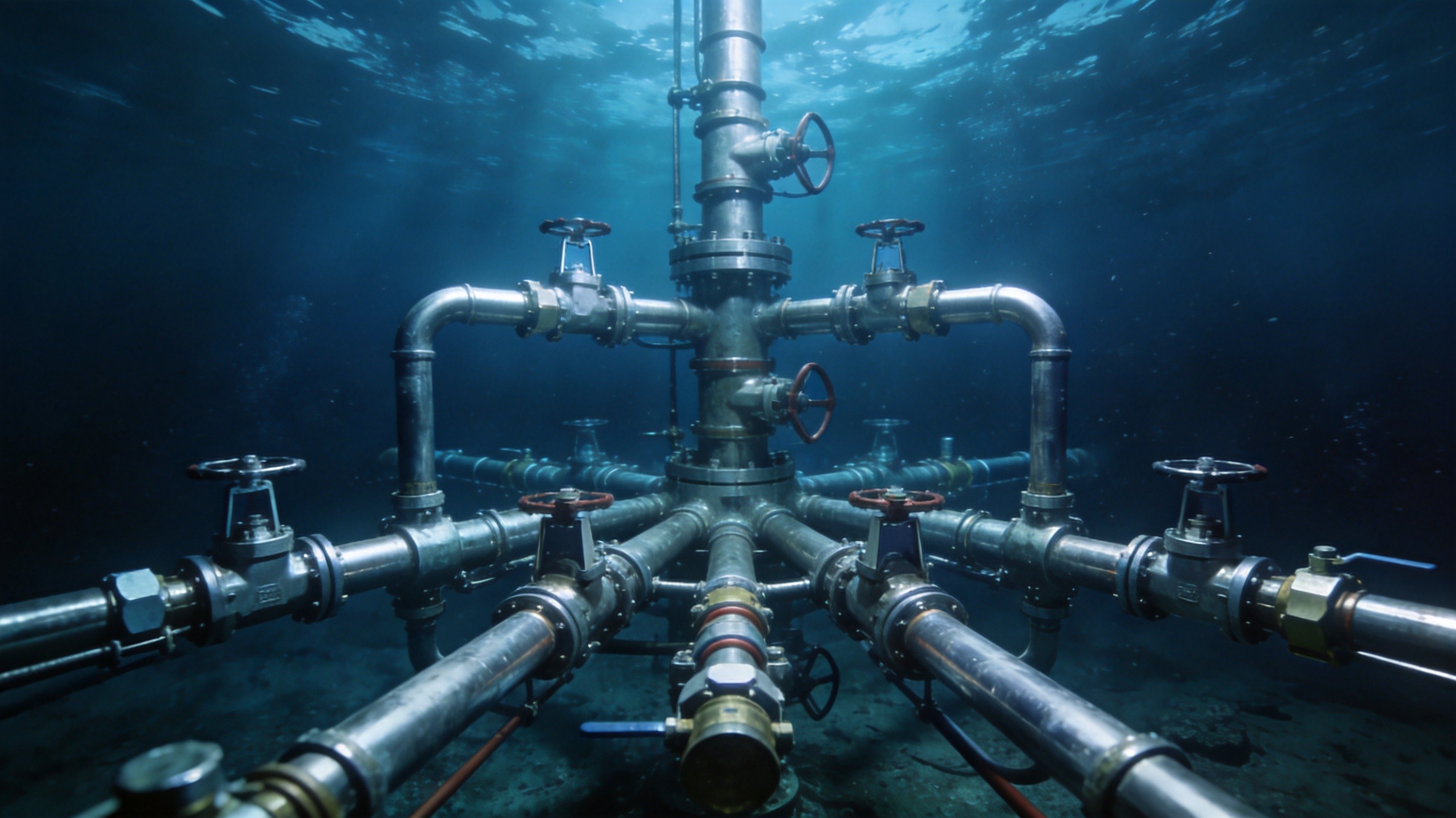
Deep Water Is a “Temple” - and a “Restriction Zone”
Deep water is called the “temple” of offshore oil exploration and development, the main replacement region for the world's future oil and gas reserves. But how harsh is it down there? At 1,500 m, external hydrostatic pressure plus production pressure stacks up to a hundred or more megapascals; drill deeper into the wellbore and downhole temperature can approach 260°C and beyond, all while hydrogen sulfide, carbon dioxide, brine and sand grains gnaw at the equipment.
Pressure, temperature, corrosion, abrasion - four mountains pressing down on every component. Plain metal is corroded by seawater; rubber seals age, harden and extrude under high temperature and pressure, failing within months. The world's oil and gas keeps going deeper, and the tolerance margins left to material engineers shrink with every meter.
A “Wellhead Faucet” More Precise Than an Engine
The heart of deepwater production hides inside the subsea tree (Subsea Christmas Tree). Assembled from more than 2,000 components, it works like a “faucet” at the wellhead, controlling production rate, real-time monitoring and adjustment. For a long time, only a handful of companies worldwide could design and manufacture the whole system.
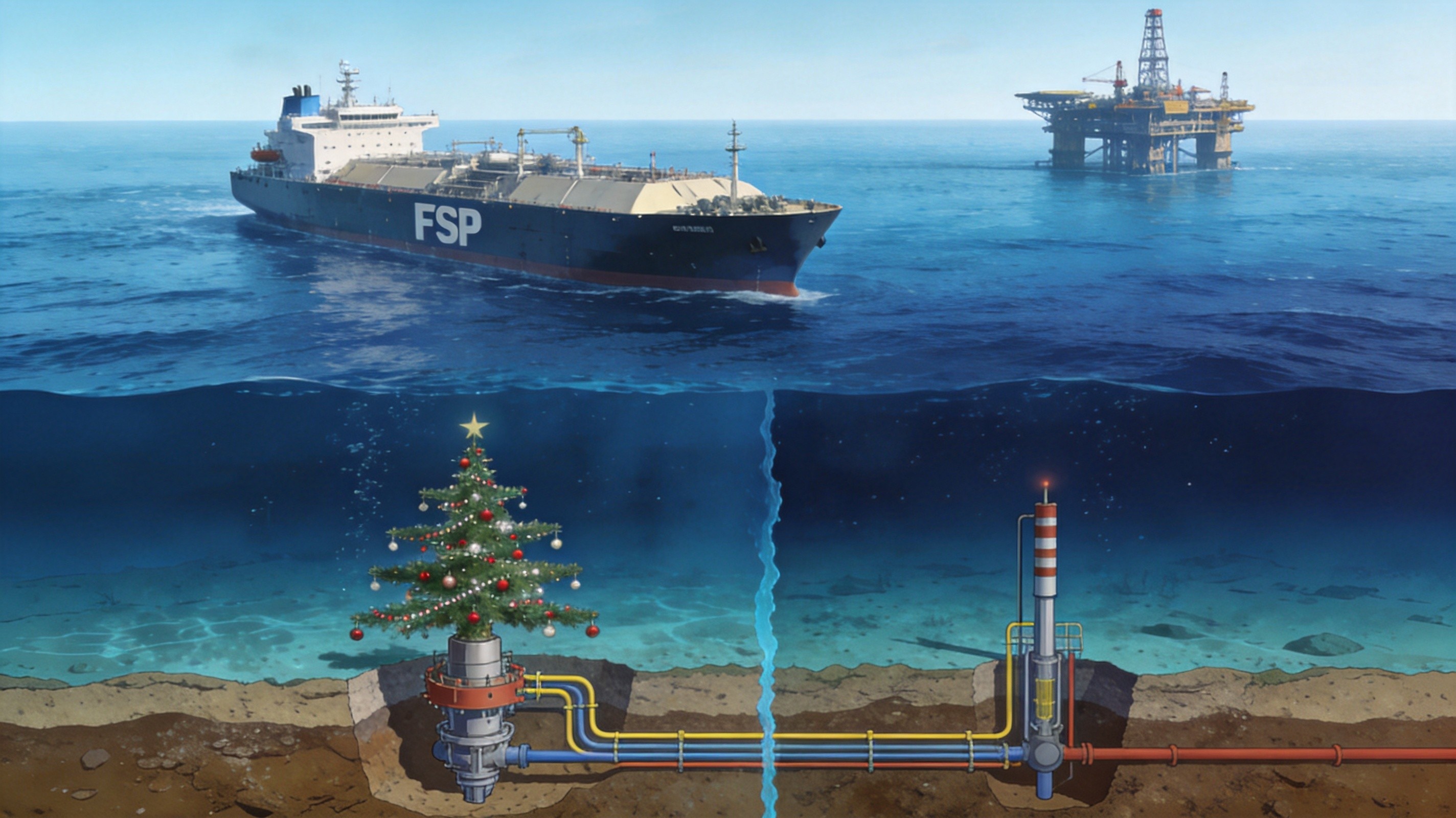
In 2022, China's first 500-meter-class domestic subsea tree went into service in the offshore fields of Hainan's Yinggehai basin, cutting costs by about 27% versus imported units. In April 2026, the first domestic 1,500-meter-class compact subsea tree was applied in the field, reducing its volume by 20% compared with foreign designs.
And the most treacherous link inside this “heart” is precisely the unremarkable seals. Once installed, they run maintenance-free for 20–25 years and can never be changed in place. A single failure can shut down the whole well - and pollute an entire stretch of sea.
More Dreadful Than a Rocket: Sealing Is the Lifeline
A rocket's seals only have to survive a handful of launches. Deepwater equipment seals must be “installed once, hold 25 years, soak in seawater, oil and gas - and never leak.” On that measure, the subsea seal is every bit as demanding as a rocket component.
Rubber gives way, metal corrodes. The industry's answer has shifted to specialty engineering plastics such as PEEK (polyetheretherketone): continuous service to 260°C, short-term to 315°C; almost “numb” to hydrogen sulfide, carbon dioxide, brine, acids and most oil and gas media; creep-resistant and dimensionally stable, so it will not deform under sustained load; wear-resistant and self-lubricating for dynamic contact; and with water absorption below 0.5% and a density only about 1/6 that of steel - lighter, yet tougher.
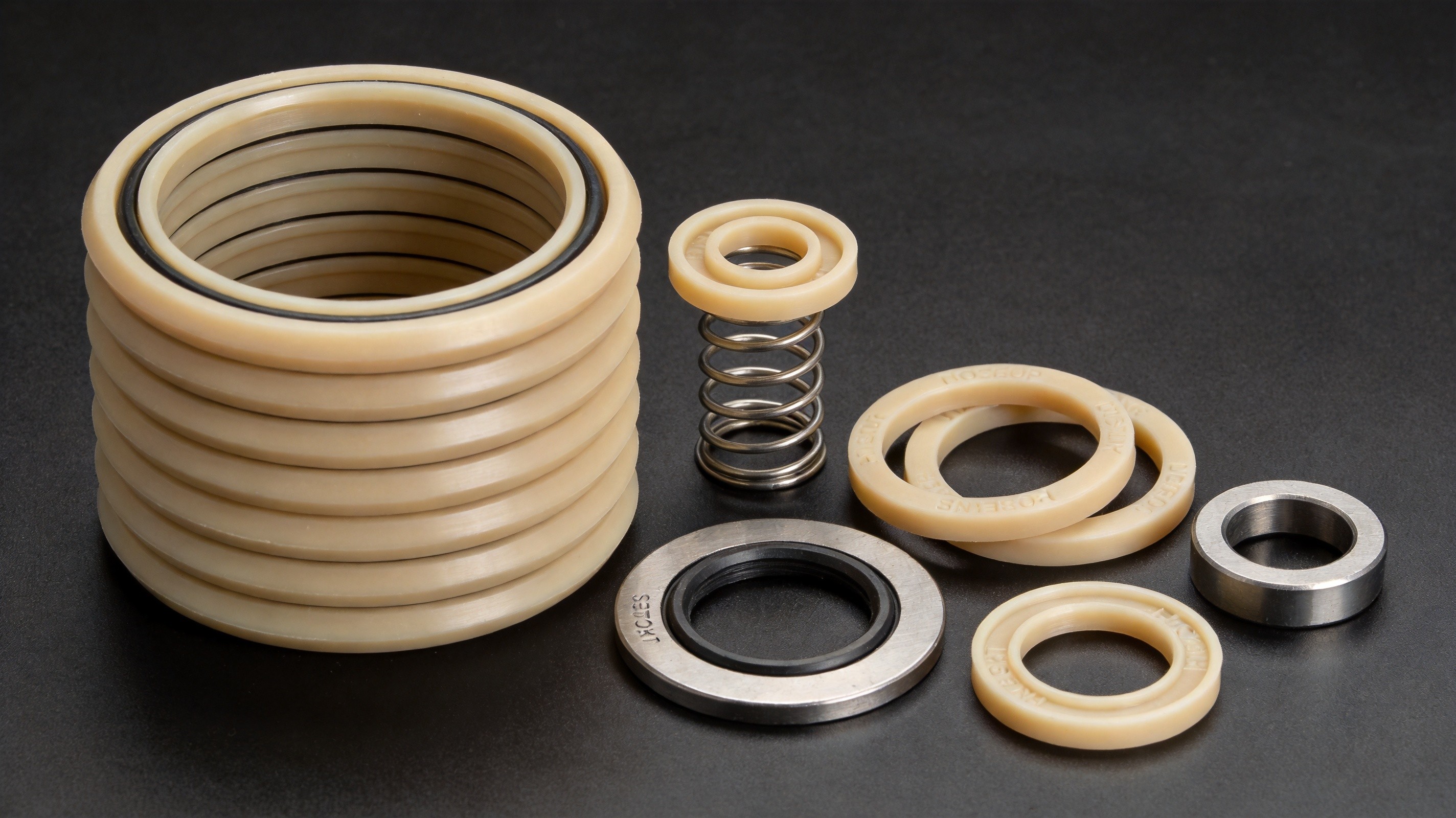
How PEEK “Carries” the Deep Sea
PEEK does not fight the deep alone. It works alongside elastomers, metals and composite structures: as seal support rings, backup rings and valve seats that keep rubber from extruding and creeping under high temperature and pressure; as bearings and bushings that carry dynamic friction and abrasion; and as electrical connector components and downhole tool structures that keep telemetry and control reliable.
Its real value is one sentence: in the places nobody sees, PEEK holds the “still leak-free in year 25” bottom line of the whole system.
From “Usable” to “Capable”: A Material Lifeline Behind the China Solution
Making deepwater equipment self-reliant rides on the localization of a whole material-supply chain - from the 500-meter-class tree in 2022, to the 1,500-meter-class tree in the field in 2026, to a target of 85% localization for the 1,500-meter deepwater subsea tree. Deepwater key equipment is accelerating into a “China Solution.”
And under that equipment sits material supply. Whoever can stably deliver specialty-engineering-plastic parts that endure high temperature, high pressure, corrosion and high insulation is the one who holds the “material lifeline” of deepwater development. This is not just the arithmetic of oil prices - it is a cornerstone of national energy security.
Domestic Specialty Engineering Plastics Carry the “Deep Blue”
These requirements land squarely on the capabilities of companies such as Dalian Luyang Technology and Yuchuan New Materials. Dalian Luyang has deep experience in the modification, injection molding and precision machining of PEEK specialty engineering plastics - sealing support rings, wear-resistant bearings and high-pressure structural parts that exactly match the punishing conditions of deepwater equipment. Beijing Yuchuan New Materials brings capability in high-insulation, arc-resistant PI insulation and structural parts, covering underwater connectors and motor insulation - the “invisible critical parts.”
The deeper the ocean and the deeper the well, the more materials prove their mettle. When a PEEK sealing ring holds leak-free at 1,500 meters under water for 25 years, and a PI insulator keeps an entire control chain alive in high-voltage, high-humidity conditions - domestic specialty engineering plastics are, with the word “endurance,” shouldering China's deep-blue energy confidence.