
On August 23, at the National Speed Skating Oval (the "Ice Ribbon") in Beijing, the second day of the 2nd World Humanoid Robot Games turned the record wall upside down.
400m: Tiangong Ultra sprinted 38.15 seconds - the human men's world record stands at 43.03 seconds (Van Niekerk, Rio 2016, untouched for a decade), so the robot was nearly five seconds faster. 1500m: the Tianzhuo team won in 2:21.64, and all of the top six beat the human world record of 3:26. Long jump: the Tianjiao team landed 7.97 meters, while last year's best at the inaugural Games was just 1.25 meters - a six-fold improvement in a single year.
It took humanity more than a century to push the 100m from 10 seconds to 9.58. Robots went from 21.50 seconds to 9.32 in just 365 days. This is not science fiction - it is what actually happened on August 23.
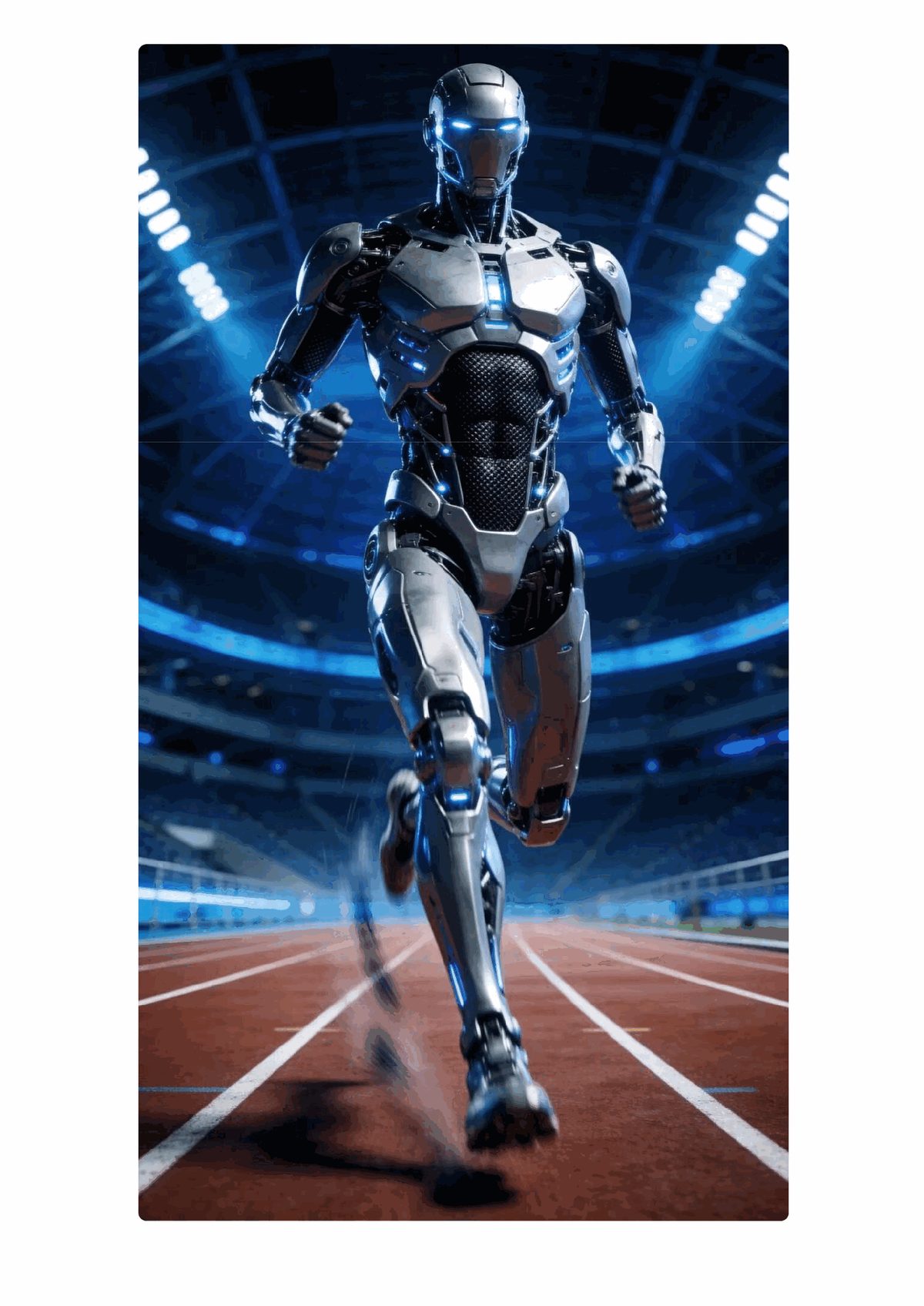
The First Hero of These Records Is Not the Algorithm - It's the Material
Most people assume that AI algorithms deserve the credit for these breakthroughs. The answer is unexpected: the record-breaking Tiangong Ultra uses a "world's only" domestic carbon fiber for its main skeleton - T1200 grade, with a tensile strength of 8000 MPa.
What does 8000 MPa mean? It is roughly 10 times the strength of ordinary steel at one quarter of its density. A 1 cm² cross-section of T1200 carbon fiber can lift a fully loaded C919 (about 80 tons). Its filaments are less than one-tenth the thickness of a human hair, yet they absorb every impact the skeleton endures at sprint speed.
Speed does not come from nowhere. A 180 cm, 52 kg humanoid robot crossing the finish line like a bullet is material confidence made visible.
Sprint Tests Explosiveness, Distance Tests Endurance, Long Jump Tests Impact Resistance
The three events are really three different material exams.
400m sprint: every stride puts high-frequency bending loads on the skeleton - the material must have extremely high fatigue strength and must not crack or degrade. 1500m: continuous high-speed running for minutes means sustained load on joints and structure - a test of persistent fatigue endurance. Long jump landing: several times body weight hits in an instant - structural parts must absorb the shock without fracturing.
Only by passing all three does a carbon fiber composite prove it is not "good enough in the lab" but genuinely ready for extreme real-world conditions.
From Lab to Arena in One Year - a Path Humans Took Decades
Just over a year ago, the best 100m result at the inaugural Games was 21.50 seconds - wobbly, like a child learning to walk. The 400m champion needed 1 minute 28 seconds.
In one year: 100m from 21.50 to 9.32, 400m from 88 seconds down to 38.15, long jump from 1.25m to 7.97m.
Behind this progress is not only algorithm iteration, motor upgrades and thermal breakthroughs, but a leap across an entire material supply chain. The performance ceiling of the skeleton material decides how hard a robot dares to run.
Behind "World's Only" Is a 40-Year Breakthrough
The T1200 grade was long choked off overseas.
For years, the global high-end carbon fiber market was dominated by Japan's Toray, whose highest mass-produced grade, T1100, reaches about 7000 MPa. T1200 samples existed only in laboratories and could not be engineered at scale.
The breakthrough came from Zhongfu Shenying under China National Building Material Group. After 20 years of R&D, in March 2026 the company globally launched SYT80 (T1200 class) ultra-high-strength carbon fiber with stable mass production at the hundred-ton level - completing localization of raw material formulation, production processes and full-line equipment. China became the only country in the world to achieve engineered mass production of T1200-grade carbon fiber.
From "follower" to "parallel runner" to "leader", this "black gold" carbon fiber is a complete domestic substitution path in one thread.
Robots' Next Stop Is a Materials Battlefield
This materials revolution is an entry ticket for every new-materials company.
As robots move from the arena to real working conditions - from running and jumping to tightening screws, entering factories and doing rescue work - material requirements upgrade from "lightweight and strong" to combined performance: high-temperature resistance, flame retardancy, corrosion resistance and long service life. Whoever masters the full chain of "formula - forming process - precision parts" gets onto the procurement list.
Dalian Luyang Technology specializes in modified specialty functional plastics, offering PEEK and PPS compound formulations plus integrated precision molding - exactly the wear-resistant, heat-resistant parts robot joints need. When materials are chosen right, a robot is light, strong and durable; when materials are blocked, no algorithm can make it run.
The Material Ceiling Decides the Robot Ceiling
So when you watch a robot Games, do not just stare at the scoreboard.
It took humans over a century to go from 10 seconds to 9.58 in the 100m; robots did it in a year. Behind that speed, the real dividing line is not code but material - a "world's only" domestic T1200 carbon fiber, and a complete industrial chain from laboratory to mass production, from monopoly to independence.
The material ceiling decides the ceiling of robots. That is the most valuable thing to see in every materials revolution.