
Here is the conclusion first: on October 21, Unitree unveiled its next-generation H2-X “Kung Fu Legend” humanoid robot. In the demo video it clears a car in a leap, spins, and kicks the car door into a dent; then an elbow strike leaves a dent in the hood; it drops from a 4-meter platform, rolls and lands steadily; and the most striking scene comes from a rescue scenario — it digs its arms in and lifts the entire front of a car off a trapped person to make room for rescue. Unitree says the footage is all real-time, no acceleration.
Last year people laughed that a humanoid robot “doing a flip or dancing was just showing off”; this year this machine translates “knowing martial arts” into “being able to save lives.”
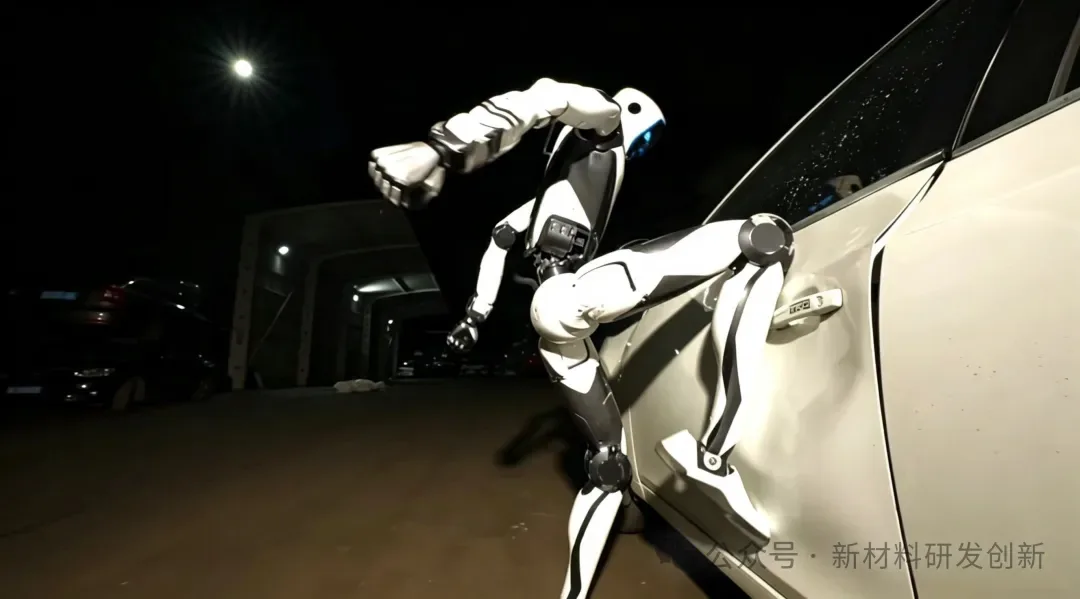
01 The Ledger Behind “Taking the Hit”: 182 cm, 31 DOF, 2070 TOPS
First, the machine’s credentials. H2-X stands 182 cm tall with 31 degrees of freedom, carrying a 2070-TOPS computing chip, with a maximum endurance of about 8 hours — for reference, the standard H2 is publicly rated around 3 hours. The body uses aviation-grade aluminum and titanium alloys, plus one material Unitree explicitly calls out: high-strength engineering plastics. Its UnifoLM world-action large model is said to be the first to achieve fully autonomous combat for a humanoid robot — no remote control, no preset script. Unitree targets it at guard duties, emergency rescue and security protection. From “being able to walk and jump” to “being able to fight and take hits”, parameters are only the entry ticket — the real test is whether it can keep from coming apart or failing during extreme motions over the long term.
02 Behind Each Dazzling Move Is Repeated High Impact, High Load, High Fatigue
Outsiders watch “it really kicked the car door in”; insiders watch how this body’s bones bear it. Lifting a car means the arm joints must briefly take a load several times body weight while holding the structure; a 4-meter landing means the lower limbs and hips absorb the whole machine’s landing impact; kicking a car door in means the foot and knee pass force through a high-speed collision without breaking apart. These are not one-off “demo” moments — in the video it continuously leaps, strikes, lands and gets back up, and every compound motion is a long, repeated fatigue test on joint actuators, reducers and structural parts.

03 The First Battleground of “Toughness” Is the Invisible Materials in the Joints and Structure
To carry this duty long-term, the joints are tested first. One joint actuator, one reducer, absorb instant impact under high-speed collision and high load, while also withstanding the temperature rise of long-running motors at full power; structural parts must hold their shape under repeated force — no creep, no fatigue cracking; and the whole robot must control its weight, which pushes lightweighting — every extra kilogram is a cost in endurance and agility. So Unitree’s call-out of “high-strength engineering plastics” is no accident. Wear resistance, impact resistance, high strength, light weight, dimensional stability — every second of “taking the hit” is these materials holding the line.
04 PEEK: Wear-Resistant, Impact-Resistant, High-Strength, Light — the Material That Locks in “Toughness”
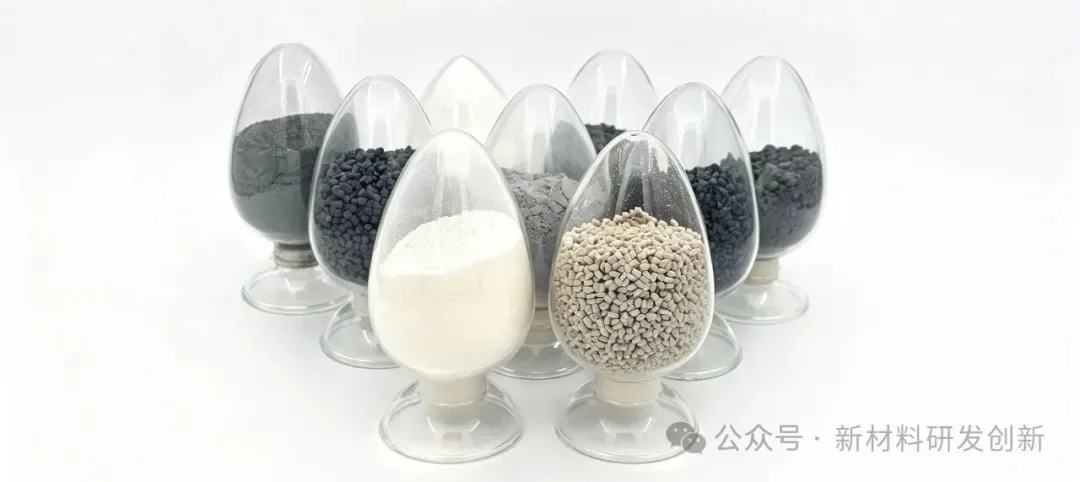
In these “carry-it” joint/structure/housing scenarios, PEEK (polyether ether ketone) is one specialty engineering plastic repeatedly name-checked. Its hard-earned strengths hit exactly the pain point of “from doing tricks to taking hits”: wear-resistant and self-lubricating — joint pins, gears and bushings hold up more stably under high-frequency friction and high impact, in many cases self-lubricating to save wear and maintenance; high strength and fatigue resistance — resisting fatigue cracking under repeated impact and alternating load, so structural parts survive “kick after kick, landing after landing”; dimensional stability — little deformation from heat, humidity or pressure, so precision fit does not loosen; and lightweight with high specific strength — density about 1.3 g/cm³, about 1/6 that of steel, so joints and structure deliver real self-weight control after “replacing metal with plastic”. Joint bushings, high-strength structural parts, seals and weight-reduction parts — for a robot to “take the hit”, PEEK claims a very large share.
05 From “Demo Once” to “Reliably Repeat”, Material Is the Lifeline
A key turning point is underway: in the early days a robot’s need for materials was “small lots, sampling, testing performance”; once it moves from display toward mass production and long-term duty, the demand switches to “mass-producible, cost-reducible, stable long-term supply, verifiably reliable”. Modification and formulation, precision injection molding, batch consistency — the whole chain is real craft. This is the window where specialty engineering plastics move from “import replacement” to “domestic autonomy” — a maker like Dalian Luyang Technology, long engaged in PEEK modified compounds with a one-line precision-injection-molding capability, sits exactly on the “from material to part, stable supply” logic, at the main line where a robot must go from performance to long-term service.
06 Being Able to Jump Is a Talent; Being Able to Take the Hit Is the Confidence to Enter
What impresses most about this Unitree machine is not that it dented a car door or cleared a high platform, but that it finally aims a robot’s physical capability at concrete uses like saving people and guarding. It is also the footnote to the whole industry: robot competition is shifting from “show” to “use” — the contest is no longer the brilliance of one move, but whether it can hold up steadily year-round in real, repeated, high-intensity scenes. And that “holding up” ultimately lands on the wear parts in its joints, the high-strength material in its structure and the lightweight seal on its housing — components that have been taking shock since the first push yet never steal the spotlight. Being able to jump only gets you a ticket; being able to take hit after hit without coming apart or losing precision is what holds the confidence to enter — and much of that confidence is given by materials. From Dalian Luyang Technology, a specialty-engineering-plastics manufacturer working in PEEK, PI and PTFE modification and precision injection molding for wear-resistant joint bushings, high-strength structural parts, seals and lightweight parts in humanoid robots.