Here is the conclusion first: on October 20, the “Green Hydrogen No.1” — the CNNC Songyuan hydrogen industrial park’s Phase II in Jilin broke ground at a total investment of RMB 10.828 billion. Green hydrogen is visibly moving from demonstration to scaled commercial use, and the electrolyzer is the heart of it. The least-noticed part that decides whether it can keep running steadily for years — the part almost no one dares to cut corners on — is the cell frame sitting inside each electrolytic cell.
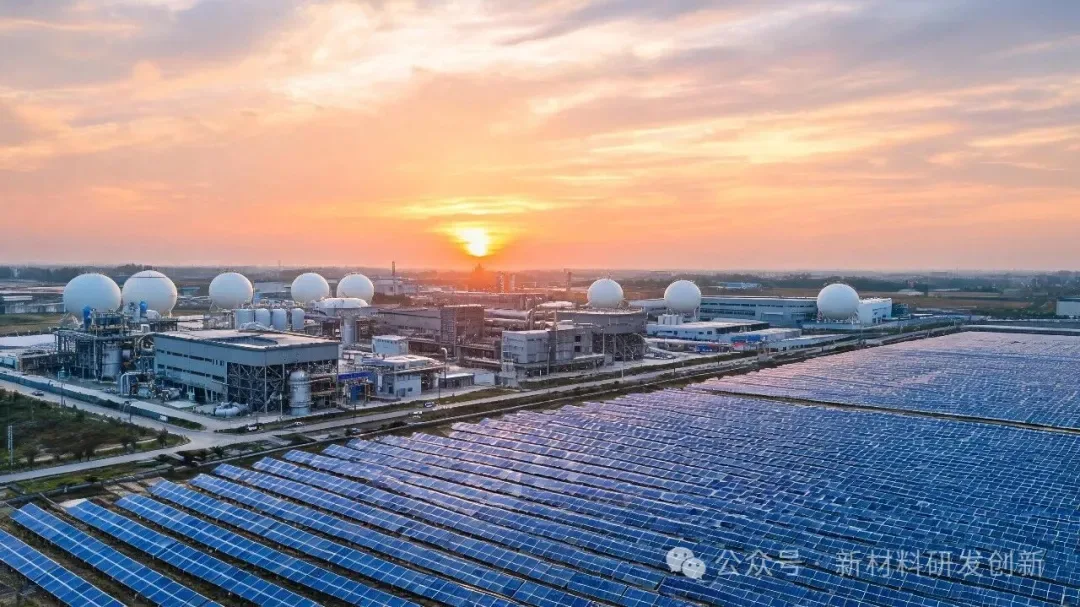
01 A ¥10.8 Billion Groundbreaking Points to an “Invisible” Threshold
On October 20, Phase II of the “Green Hydrogen No.1” CNNC Songyuan hydrogen industrial park started in Jilin, with a total investment of RMB 10.828 billion. Phase I had already come on stream in December 2025, setting four world records: the largest scale, the largest hydrogen-storage capacity, the widest-flexibility process, and the largest alkaline-electrolysis hydrogen equipment set. On October 13, green ammonia produced by Phase I completed the world’s first ship-to-ship bunkering of green-ammonia fuel at Zhoushan. With Phase II, the two phases together will build a capacity to produce 600,000 tonnes of green ammonia per year — green hydrogen to green ammonia is formally stepping from validated demonstration toward scaled commercial operation. Yet when a billion-level project goes in, the part most likely to be taken for granted — and least allowed to fail — is often not the eye-catching machines but a humble-looking “frame” inside each electrolytic cell.
02 Electrolyzer Orders Surpass 1 GW in the First Three Quarters, with Alkaline the Absolute Mainstay
Songyuan is a snapshot; zoomed out, green hydrogen’s “ramp-up” is no longer a slogan. Industry incomplete statistics put domestic hydrogen electrolyzer orders (including wins, contracts and deliveries) in the first three quarters of 2026 at about 60 projects, a scale of nearly 1,093 MW, and a hydrogen-production capacity of about 218,600 Nm³/hour. Delivery is also accelerating — the first 28 electrolyzers of CNNC’s Keyou Front Banner wind-&-solar hydrogen demonstration project completed installation; CEEC made a one-time central purchase of 176 electrolyzers; and Sinopec’s Zhongtian Hechuang and others issued successive tenders. Even more telling: alkaline electrolyzers accounted for over 91% of these orders. A very large share of green hydrogen’s scale rests on the most mature and cost-effective route — and the core structural part of an alkaline electrolyzer, the cell frame, is exactly the “boundary” that decides whether it runs stably over the long term.
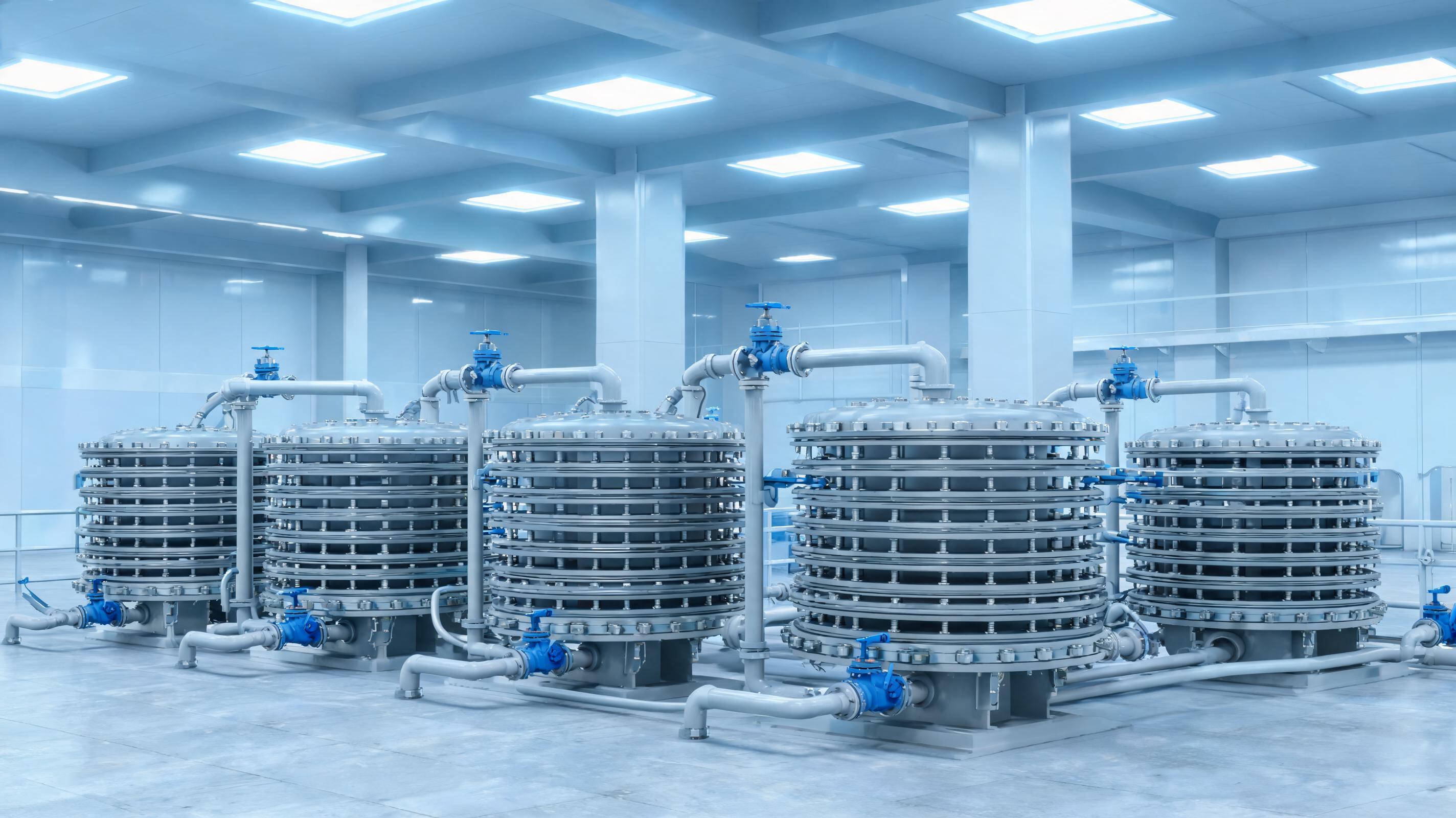
03 Everyone Watches the Electricity and the Catalyst — Almost No One Asks About That “Frame”
In talking about water electrolysis, it is habitual to focus on whether the electricity is cheap enough and whether the catalyst is efficient. But for an electrolyzer to produce hydrogen steadily all year round, the contest is far broader than those two numbers. The cell frame bounds the electrolytic cell’s internal space, distributes the gas-liquid channels, and carries the sealing — it is the beam inside a building’s load-bearing wall: nobody notices it until a failure stops the whole machine. And under the piled-on conditions of high-concentration KOH (potassium hydroxide) electrolyte, high temperature and high pressure, that “beam” is tested far more harshly than it looks.
04 The Metal Frame’s “Three Dreaded Ledger Lines”
Traditional alkaline electrolyzer cell frames are mostly metal. In this strong-alkali-plus-high-pressure environment, the metal frame’s first hurdle is electrochemical corrosion; to resist it, a protective treatment such as electroless nickel plating is usually applied — the second hurdle, adding process steps and cost; worse still, in long-term operation the protective coating risks peeling, and once it does it not only accelerates failure but can also contaminate the electrolyte. Add these three ledger lines and a single frame’s “reliability” turns out to be far more valuable than it looks. That is why, over the past two years, engineering plastics and other non-metallic materials have been increasingly adopted for cell frames — they work stably in high-concentration alkali by themselves, avoiding the complications and risks of the plating route from the start.
05 The PEEK Frame: Three Cards Played at the Lifeline of the Alkaline Electrolyzer
Among the specialty engineering plastics available, PEEK (polyether ether ketone) is especially valued. Its three cards hit right on the alkaline electrolyzer cell frame’s vital points: chemical/corrosion resistance — long-term stable in high-concentration KOH electrolyte, no electrochemical corrosion and no electroless-nickel plating protection needed, eliminating the coating-peeling risk at the source; light weight — a density far below metal, so after “replacing metal with plastic” the whole electrolyzer’s weight and manufacturing cost drop noticeably, real value for large-format, compact designs; and good thermal stability — staying dimensionally stable with no mechanical-property decay under sustained high temperature in electrolyzer operation, giving more dependable sealing.
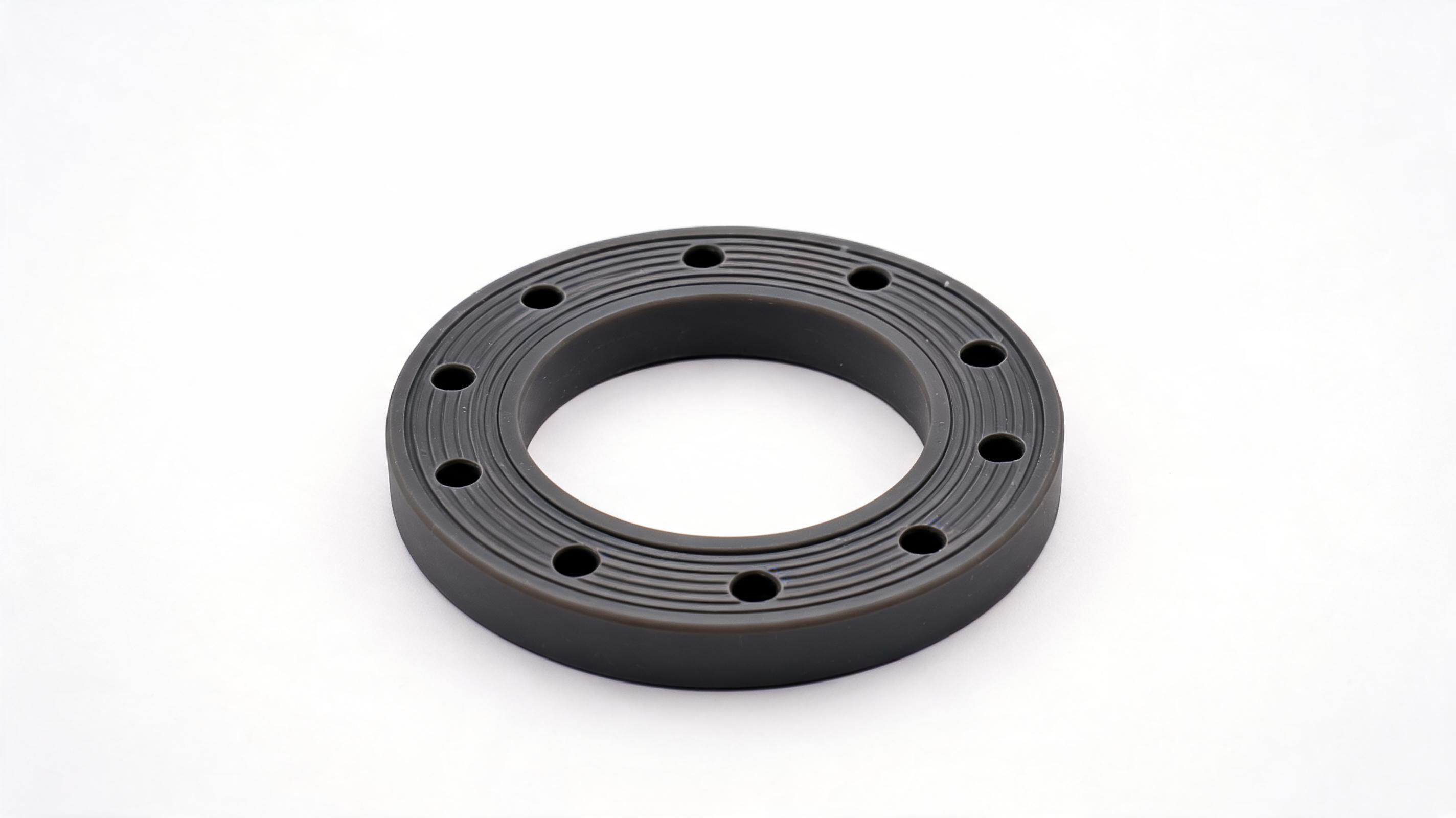
06 Standards Rise, and the “Reliability” of Components Is Pushed to the Forefront
Demand is ramping up, and industry norms are tightening in step. MIIT recently issued a public consultation on the “Manufacturing Industry Norm Conditions for Hydrogen Equipment (Alkaline Water Electrolysis Hydrogen-Production Equipment)”, setting explicit indicators-including limits on rated current density and DC power consumption. The push for higher speed, higher density and lower consumption flows all the way down to the equipment level, bringing the heat resistance, dimensional stability and long-term reliability of core structural parts like the cell frame directly to the selection table. On the road from “demonstration” to “scaled commercial use”, what holds green hydrogen back is not only cheap electricity and efficient catalysts, but whether the material in that “invisible boundary” — the frame — is hard enough.
07 A Billion-Level Project Can Also Fail on a Single “Frame”
Songyuan’s Phase II has broken ground and green hydrogen’s scale-up is speeding up. The more it moves toward scale and commercial operation, the more it comes down to four words: “long-term stability”. For an electrolyzer to produce hydrogen without stopping all year round, every core part must stand up to the repeated test of high temperature, strong alkali and high pressure. The cell frame never runs in the spotlight, yet it is the beam that cannot fail. What really decides how far and how steadily a billion-level green-hydrogen project runs is often these unremarkable parts — on duty under heavy load from day one — and behind them is the material. From Dalian Luyang Technology, a specialty-engineering-plastics manufacturer working in PEEK, PI and PTFE modification and precision injection molding for corrosion-resistant, lightweight and thermally stable cell frames, seals and structural parts in alkaline water electrolyzers for green hydrogen.