
At the opening of the 26th China International Industry Fair (CIIF 2026) on 12 October 2026, Shanghai announced a drive to push 8,000 humanoid robots into factories by 2028. On the same day, nearly 300 frontier products made their global or national debuts — including robot parts made of recyclable carbon fiber. One side is about “quantity”, the other about “lightness”. In fact, they are two faces of the same thing.

One Opening, Two Signals Pushed at Once
On 12 October 2026, CIIF 2026 opened in Shanghai. Also on that day, two signals were switched on together. Shanghai officially launched its “Action to Accelerate the Development of a New Generation of Intelligent Manufacturing”, targeting 8,000 humanoid robots into factories by 2028 and an industrial-robot density of 600 robots per 10,000 workers; cultivating 500 advanced-level smart factories and more than 2,000 AI-manufacturing scenarios; developing 10 vertical-domain large models and launching 300 high-level intelligent agents; and growing the equipment-industry scale past 200 billion yuan. At CIIF this week, nearly 300 frontier technologies made their global or national debut — among them, recyclable carbon fiber robot parts.
The Pull of “Quantity”: 8,000 Humanoid Robots Into Factories
First, the certainty Shanghai offered. The action plan sets out that by 2028: 8,000 humanoid robots will be pushed into factories, industrial-robot density reaches 600 per 10,000 workers, 500 advanced-level smart factories are cultivated, AI-manufacturing scenarios exceed 2,000, 10 vertical-domain large models are developed, 300 high-level intelligent agents are launched, and the equipment industry tops 200 billion yuan. Shanghai’s base is already deep: 2 national pilot-level and 28 national excellent-level smart factories — the largest number of any city in China for years — an intelligent-manufacturing systems-integration industry above 60 billion yuan, and equipment output value above 150 billion yuan.
The “Light” Underneath: Why a Robot Can’t Be a “Lump of Iron”
8,000 robots entering factories is not a slogan; behind it sit physics problems. A robot must lift, rotate, grip and work continuously — every gram of self-weight drains its joints, motors and load capacity. This year’s CIIF gave the material answer: among nearly 300 debuts, recyclable carbon fiber robot parts were singled out; the fair also showed a Guinness-record 5-tonne heavy-duty industrial robot and ultra-lightweight industrial power supplies. From structural parts, housings to joint components, the metal skeleton is being taken over at scale by carbon-fiber composites and specialty engineering plastics.
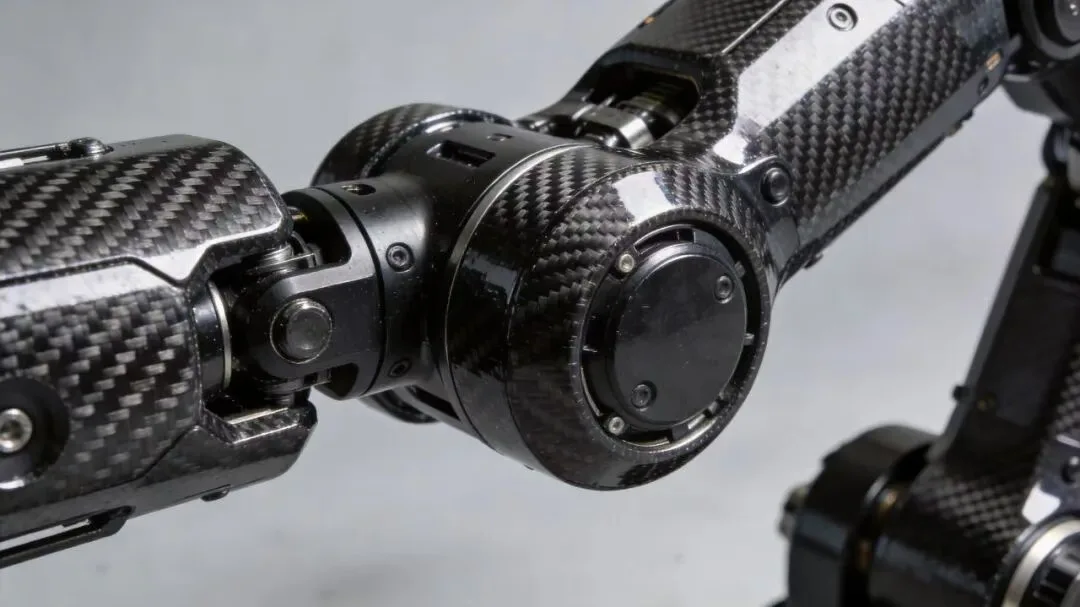
Alongside the drop in weight, performance rises rather than falls: the high specific strength, high specific stiffness, fatigue resistance and recyclability of composites correspond precisely to the three hard requirements of robots — “lightweight, high strength and long life”.
Not Just Robots: Commercial Aerospace Is Doing the Weight-Loss Math Too
The same material logic is playing out in aerospace, and the math is much harsher — every gram is launch cost. At the Innovation Technology Pavilion, a composite rocket fairing built on the technical reserves of Shanghai Jiao Tong University’s School of Materials Science is about 30% lighter than comparable ones, directly freeing weight for payload. The same idea has landed in seats: a composite seat backrest weighs about 1.2 kg less, so a ~200-seat aircraft saves about 250 kg across the whole plane and roughly 5 million yuan worth of fuel a year, already in batch production. The fair also displayed the “Xingjin Guihang”, China’s first dedicated sea-based rocket-recovery vessel, and large carbon-fiber fuselage panels for civil aircraft.
Confluence: Composites From “Usable” to “Competitive”
Put robots, rockets and airplanes side by side and you see a clear confluence: whether smart manufacturing or commercial aerospace, they are all on the same track of “weight loss – stronger performance – lower cost”, and the finish line points to advanced materials. In the past, carbon fiber and specialty engineering plastics were tagged “imported, expensive, hard to process”; today, as recyclable carbon fiber matures, mass-production lines ramp up, and automated lay-up advances, the cost and manufacturability of composites are being pulled down — shifting from “usable” to “competitive”. From Zhuque-3’s land-based recovery and Long March 10 B’s sea-network recovery, to batch deployment of low-orbit constellations and the thousand- and ten-thousand-unit mass production of humanoid robots — every new equipment moving toward “lighter” and “stronger” is placing an order with composite materials.
Industry-Chain Logic: Demand Pulls, Materials Ramp
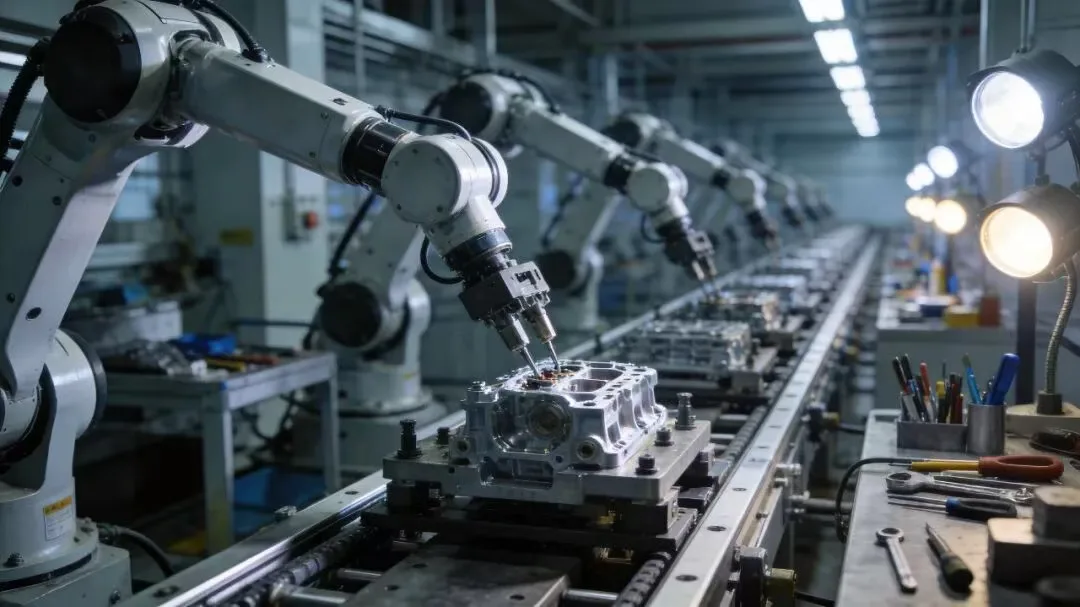
Anchor Shanghai’s policy points onto the industrial picture and the logic becomes clear: humanoid robots (8,000 into factories + 600 per 10,000 workers) drive batch adoption of carbon fiber and engineering plastics in structural parts, housings, joints and dexterous hands; commercial aerospace (routine reusable-rocket recovery, rising launch frequency) pulls composites up in fairings, tanks and structural shells; and smart-manufacturing equipment (a 200 billion yuan industry) upgrades lightweight power supplies and precision structural parts. This wave is industry-wide. For supply-chain players with the ability to modify recyclable carbon fiber and to mold and precision-machine specialty engineering plastics, it is a clearly visible “policy multiplier” through 2026–2028.
Conclusion: Machines That “Think” Land on “Lighter” Materials
The picture of 8,000 robots entering factories is futuristic and exciting, but what really lands it may not be the algorithm on a screen — it is those lighter, stronger, more durable material parts on the shop floor. From the 30%-lighter fairing at CIIF to recyclable carbon-fiber robot parts, new materials do not speak, yet they are quietly rewriting the cost account of smart manufacturing and commercial aerospace with the plain logic of “lighter by a gram, stronger by a notch”. When machines begin to think, the first thing that gets “weight-reduced” for them is the material. From Dalian Luyang Technology, a specialty-engineering-plastics manufacturer working in PEEK, PI and PTFE modification and precision machining for robot joints, structural parts and sealing applications.